- 1 03:46
- 2 02:39
- 3 03:20
- 4 02:48
- 5 02:18
- 6 02:21
- 7 03:30
- 8 03:16
- 9 04:01
Choose your streaming service
An eccentric journey through alternative hip-hop, dark humour, musical experimentation and the absurdities of modern life.
Released: 7 August 2024 · Artist: Ghostown · Tracks: 9 · Running time: Approximately 28 minutes · Style: Alternative hip-hop, electronic, experimental
Much in Little
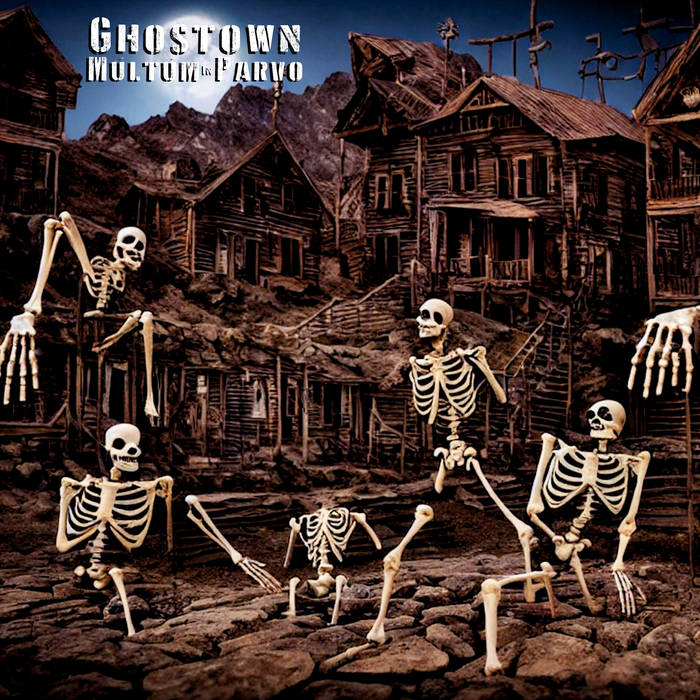
There is something wonderfully contradictory about Multum In Parvo, the 2024 album from British-born, France-based musician and producer Ghostown.
The Latin title, meaning “much in little”, is particularly appropriate. Across nine compact compositions, Ghostown explores an extraordinary range of subjects: poverty, political disillusionment, technological alienation, artistic frustration, social conformity and the peculiar absurdities of everyday existence.
Yet this is not an album weighed down by its subject matter. On the contrary, its musical personality is frequently playful, mischievous and irreverent.
Written and recorded in a house bearing the same name on a windswept, rainy island, Multum In Parvo feels like the work of an artist observing the outside world from a slightly detached perspective. The result is a collection of songs that alternates between social commentary, surreal humour, intricate wordplay and instrumental experimentation.
Ghostown’s music occupies an unconventional space within alternative hip-hop. Its foundations lie in rhythm and sampling, but its influences and techniques extend beyond traditional genre boundaries.
The album’s defining quality is the relationship between its carefully constructed musical grooves and its unpredictable lyrical excursions.
The Music Comes First
To understand Multum In Parvo, it is useful to understand Ghostown’s approach to composition.
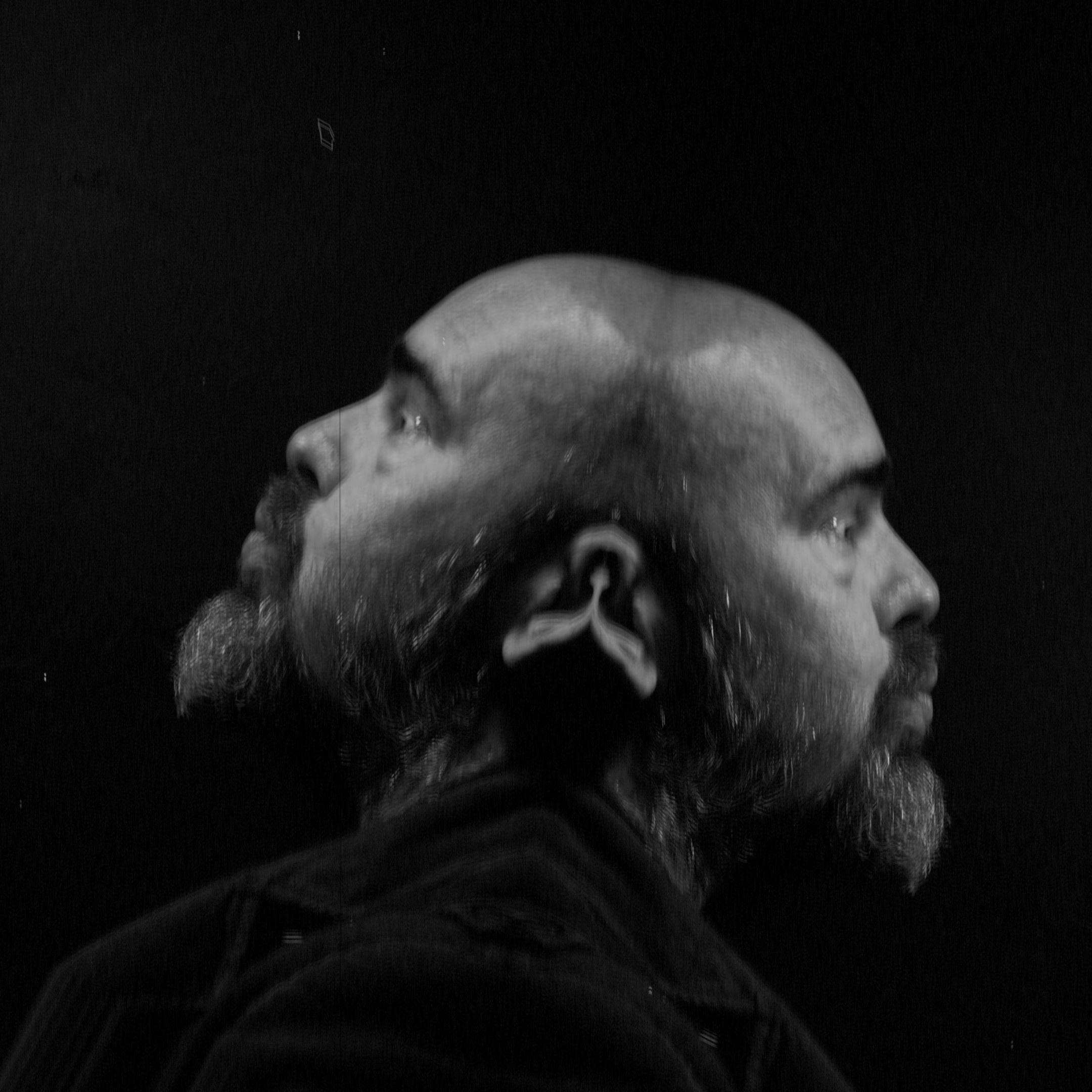
Rael, the musician behind Ghostown, has followed essentially the same creative process since beginning to make music in 1997 with a keyboard and a four-track tape recorder.
The process begins with a groove.
A rhythmic pattern, keyboard phrase, sample or melodic fragment provides the initial inspiration. This musical idea is developed into an arrangement before the lyrics are written around it.
The approach helps explain the album’s unusually close relationship between rhythm and language. Rather than simply placing words over an existing instrumental, Ghostown uses the musical structure to shape the vocal performance.
Syllables become rhythmic elements. Extended rhyme schemes create momentum. Unexpected verbal associations emerge from the sounds and patterns of the words themselves.
The result is a distinctive form of hip-hop in which language often behaves like another instrument.
Ghostown also maintains direct control over the recording process. He programs or plays the beats, performs keyboards, develops the musical arrangements and handles production and mastering.
The album is therefore the product of a singular creative vision, shaped by years of experimentation with samplers, sequencers, workstations and recording technology.
The Place Behind the Music
There is a geographical dimension to Multum In Parvo that adds another layer to the album’s identity.
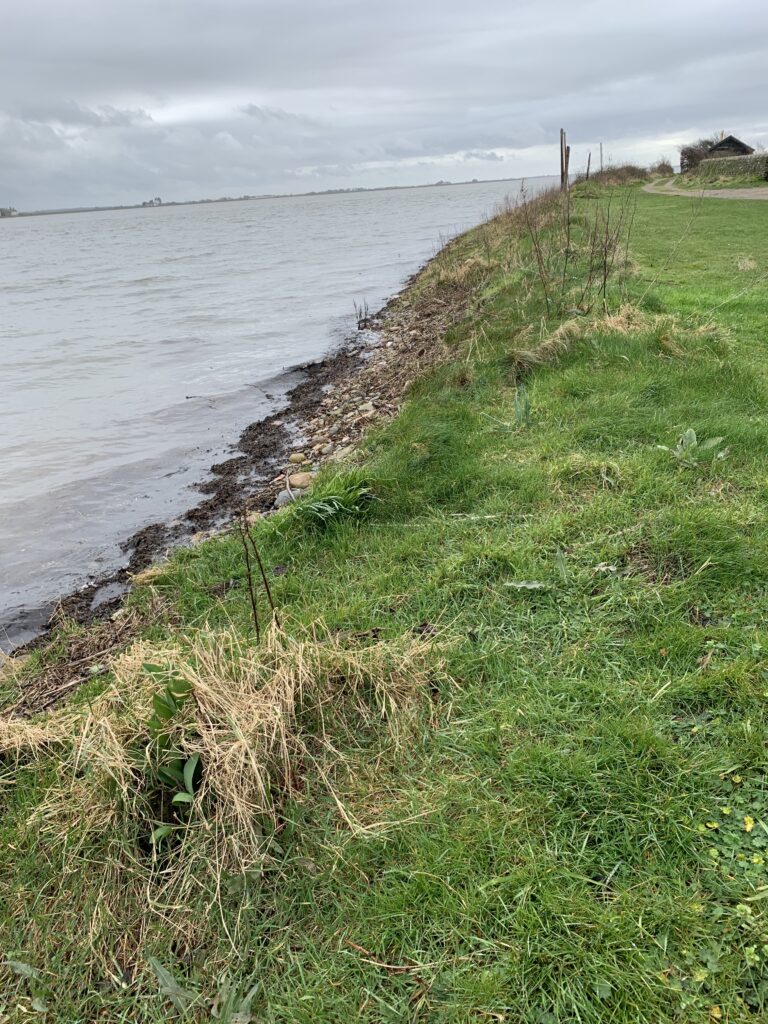
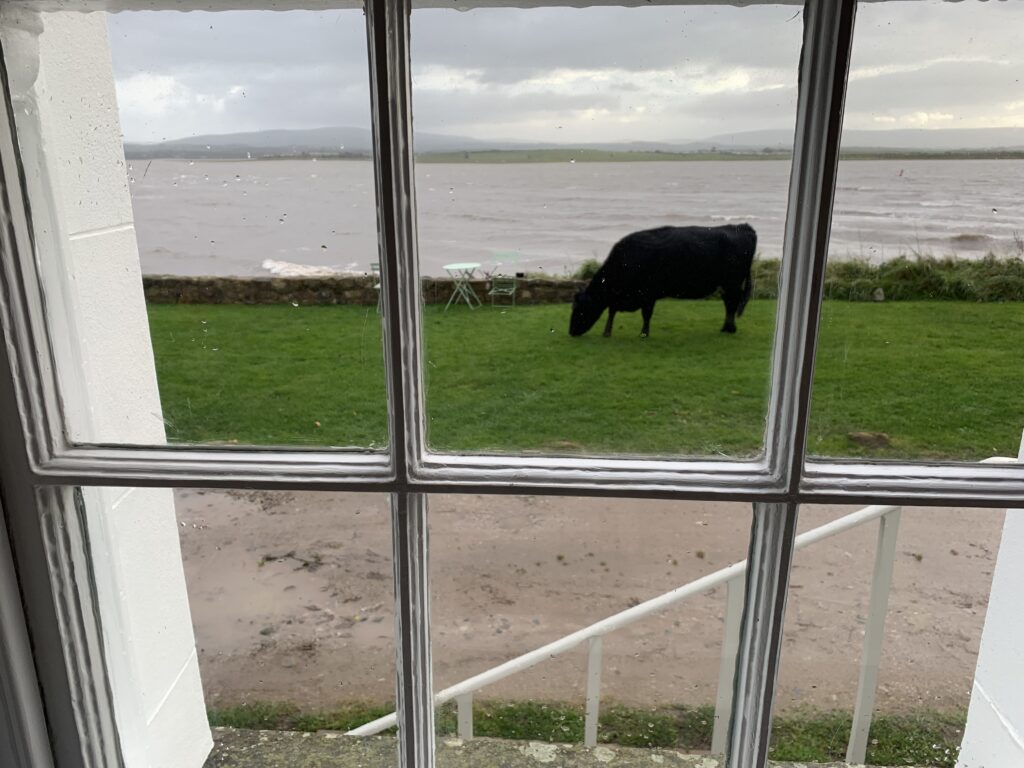
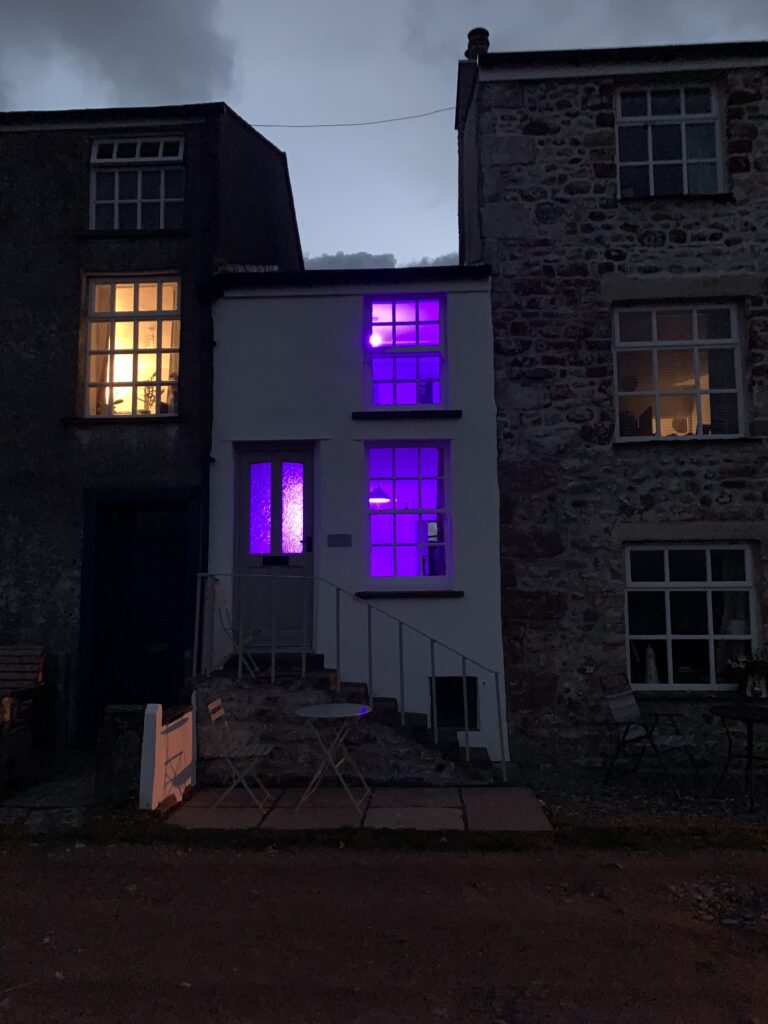
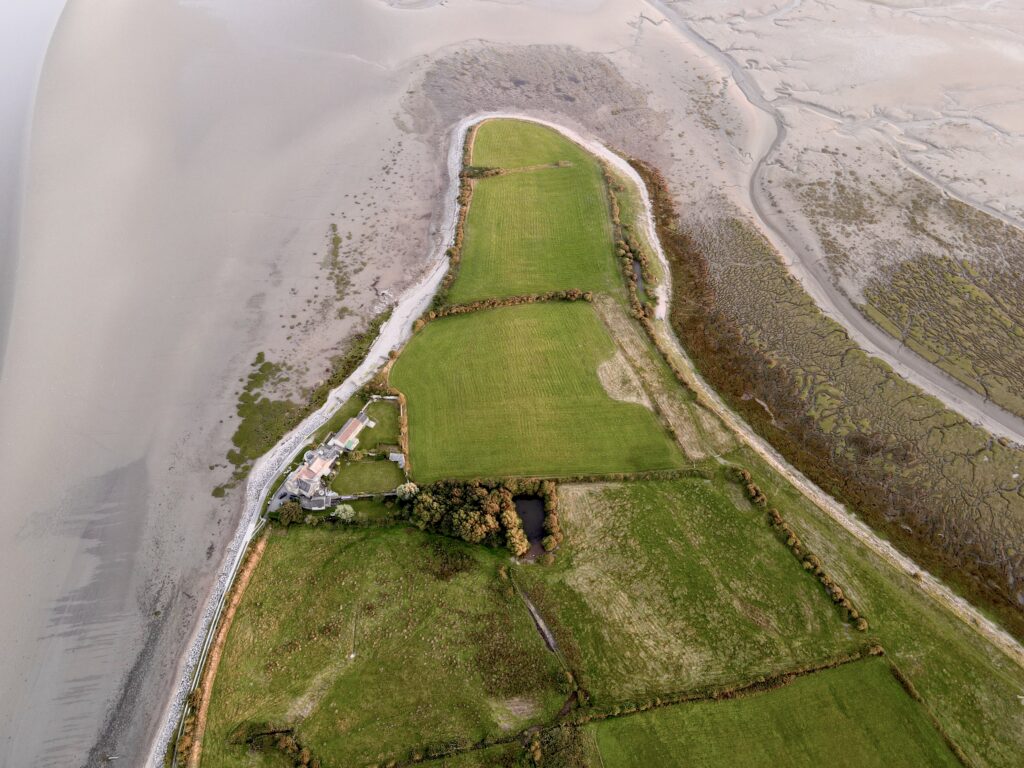
Created in a small white house overlooking a tidal coastal landscape, the album emerged from an environment of striking contrasts: expansive skies, shifting water, exposed shorelines and the intimate surroundings of a home recording studio.
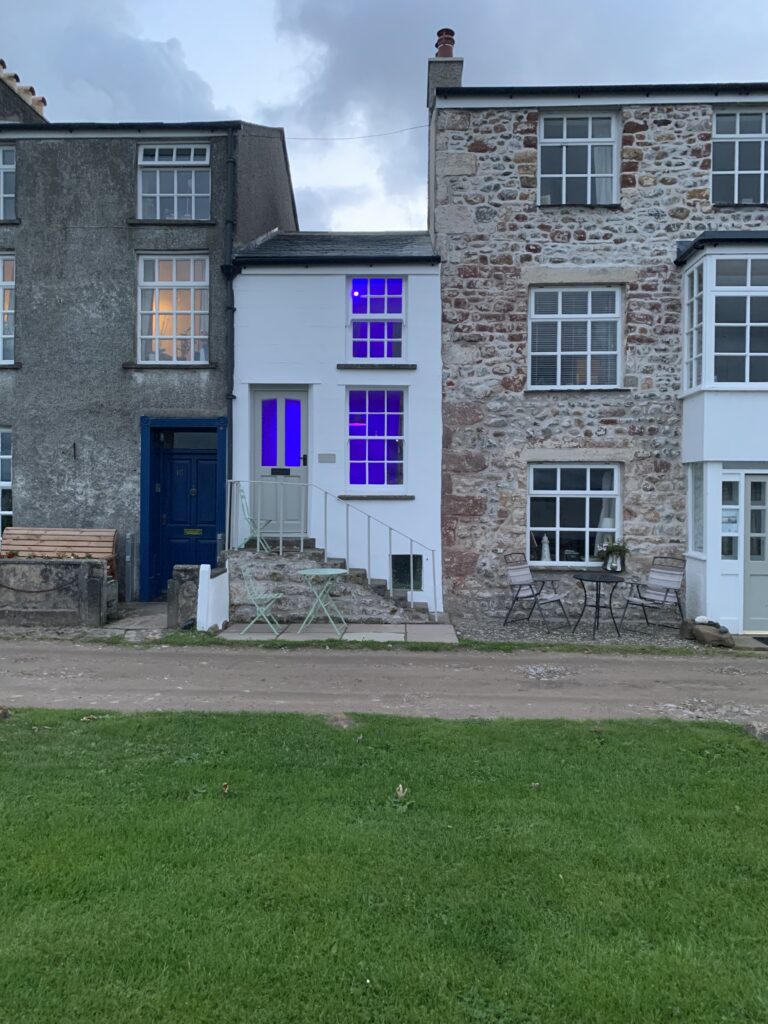
The photographs capture both the tranquillity and the unpredictability of the setting. The calm waters and open horizons suggest isolation and reflection, while the flooded frontage offers a reminder of the more challenging realities of life beside the water.
Inside, a compact studio provided the space in which Ghostown’s musical ideas could take shape. The photograph of the studio shows only part of the equipment used during this period.
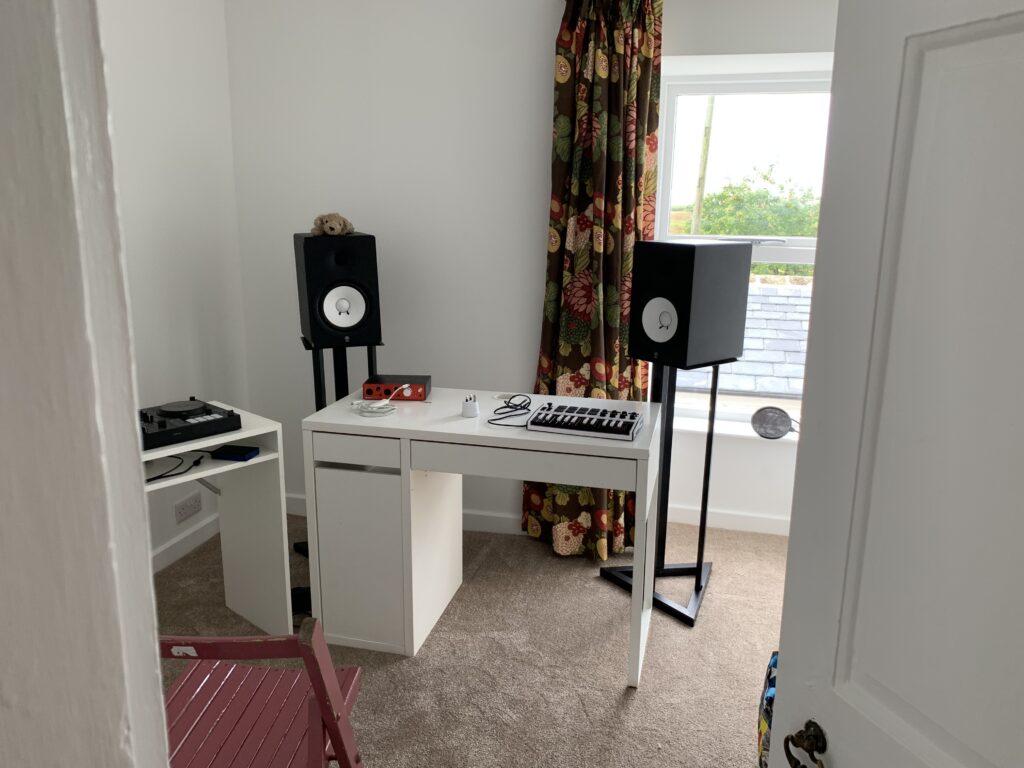
There is something fitting about this contrast between the vastness of the surrounding landscape and the concentrated activity of a small recording room.
It also provides a visual parallel to the album’s title: Multum In Parvo — much in little.
A Playful Sound for an Uncomfortable World
One of the most striking characteristics of Multum In Parvo is its refusal to match musical mood and lyrical subject in predictable ways.
The lyrics frequently describe disappointment, exploitation, frustration or anxiety. Yet the music can be buoyant, humorous and rhythmically inviting.
This contrast is especially effective in “Poor Martin”, where a playful hip-hop arrangement accompanies the story of a man whose life is consumed by unrewarded labour.
Elsewhere, electronic grooves provide the foundation for densely packed political observations, while sampled cinematic dialogue introduces unexpected moments of atmosphere and humour.
Repetition is central to the musical language. Short melodic phrases and rhythmic figures establish recognisable identities, allowing the vocals and sampled elements to introduce variation.
The production is often economical in its underlying construction, but rich in personality.
Rather than attempting to impress through elaborate arrangements alone, Ghostown demonstrates an interest in how relatively simple musical ideas can become distinctive through rhythm, sound selection and juxtaposition.
Track by Track
Read the full track-by-track analysis — 9 tracks.
01 Bearer
1. Bearer
Artistic rejection, self-deprecation and the persistence of creativity.
“Bearer” introduces one of the album’s recurring concerns: the uneasy relationship between artistic ambition and public recognition.
The song begins with a catalogue of disappointments. Applications go unnoticed, musical efforts receive little attention and criticism arrives with depressing regularity.
Yet the tone is far from self-pitying.
Instead, Ghostown transforms these frustrations into a sprawling exercise in rhyme, humour and verbal invention. English and French expressions mingle with references to financial insecurity, popular culture and personal shortcomings.
The writing is notable for the way individual sounds generate successive ideas. A rhyme becomes the starting point for another image, which in turn produces an unexpected association.
A closer look at the lyrics
Hate to be the bearer of bad news
Your resume was barely viewed
Your album got no views
And bad reviews
Fair dos
melodic airs were misconstrued
Jeered and booed
Critics severely rude
Clearly crude
Teary eyed and bruised
The opening is a demonstration of sustained phonetic control. The repeated long “oo” vowel connects words and phrases of varying lengths, while secondary relationships such as bearer/barely and views/reviews introduce further internal connections.
The lines vary considerably in length, allowing the vocal rhythm to contract and expand without abandoning the central rhyme family.
What begins as a familiar expression — being the bearer of bad news — becomes a self-deprecating portrait of rejection, both professional and artistic.
The rhyming continues to generate new images even as the emotional subject becomes increasingly bleak. This is a recurring characteristic of Ghostown’s writing: disappointment becomes the raw material for creative play.
Beneath the humour lies a recognisable portrait of the independent artist: someone who continues creating despite uncertain rewards and limited recognition.
The song’s significance as an opener is clear. It introduces an artist who may question the value of his efforts but shows little inclination to stop making music.
02 Can’t Follow
02. Can’t Follow
Language pushed towards its limits.
“Can’t Follow” is among the album’s most striking demonstrations of Ghostown’s fascination with words.
The title itself seems to acknowledge the challenge awaiting the listener.
The lyrics proceed through an unpredictable succession of references, jokes, images and observations, often connected more by phonetics than by conventional narrative logic.
Religious imagery, politics, popular culture, everyday frustrations and deliberate absurdities appear in rapid succession.
At one point, the writing even acknowledges the absence of a conventional chorus, drawing attention to the song’s unusual structure.
A closer look at the lyrics
No chorus lost in the forest
Hunting do you think he saw us
Stubborn must be a Taurus
Tourist hard to ignore us
Bout as faux cul as Boris
Can’t see what the core is
Go we’ll see who the boar is
Cash money who’s the whorest
The passage demonstrates the elasticity of Ghostown’s rhyme construction. Rather than repeating an identical ending, the sequence moves through a family of related vowel and consonant sounds.
Forest, saw us, Taurus, tourist, Boris and core is are not conventional perfect rhymes, but their phonetic similarities become convincing through rhythmic delivery.
The inclusion of the French expression faux cul introduces another layer of linguistic play, while the line about the absence of a chorus functions as a self-referential joke.
This is an important aspect of Ghostown’s artistic identity. The pleasure of the composition lies not necessarily in following a coherent argument, but in experiencing the movement of language.
The rhyme scheme becomes a compositional device in its own right.
“Can’t Follow” is consequently less a conventional song narrative than an exploration of how words can generate rhythm, surprise and humour.
03 Flow 432 Wolf
03. Flow 432 Wolf
Technology, political frustration and an experiment in tuning.
“Flow 432 Wolf” combines some of the album’s most pointed social observations with a deliberately experimental production decision.
The recording was made using a 432 Hz tuning reference, rather than the conventional A=440 Hz reference.
This was a conscious experiment in alternative tuning, reflecting Ghostown’s broader curiosity about musical frequencies and the possibilities of sound.
The arrangement features a firm electronic groove, a repeating synthesised motif and an insistent vocal performance.
The lyrics move through questions of political legitimacy, technological development, environmental anxiety and social disillusionment.
The apparent promise of progress is repeatedly questioned. Technology advances, but the individuals inhabiting this world do not necessarily appear happier, freer or more secure.
A closer look at the lyrics
Proposition we reject it
Democracy ineffective
Leaders lead yet unelected
Greed does bleed until decrepit
Yes I ran I walked I trekked it
Over time my thoughts collected
Rogue drone was intercepted
While we breathe in all collective
The repeated “-ect” and “-ed” sounds produce a remarkably consistent phonetic framework.
Within this framework, Ghostown incorporates additional internal relationships. Leaders lead and greed does bleed use repetition and consonance to reinforce the rhythmic movement.
The sequence is particularly interesting because it progresses through a series of political and social observations while maintaining a tightly connected sound pattern.
The vocal performance almost resembles a rhythmic mechanism, its successive phrases driven forward by the momentum of the rhyme.
Hidden Meanings: Flow, Wolf and Conspiracy
The title itself contains a linguistic puzzle. Flow and wolf are composed of the same four letters in reverse order.
This inversion is characteristic of Ghostown’s fascination with the structure and possibilities of language.
The final line of the quoted passage conceals another deliberate reference.
The word conspiracy derives from the Latin conspirare, literally meaning “to breathe together”.
Ghostown’s reference to collective breathing therefore introduces an etymological allusion within a passage concerned with political power, democracy and collective behaviour.
The connection is deliberately understated. The line functions naturally within the rhyme sequence, while its additional meaning remains available to listeners who recognise the linguistic reference.
This reveals an important dimension of Ghostown’s writing: beneath the apparently spontaneous movement of the rhymes, individual phrases may contain carefully considered secondary meanings.
Cinematic dialogue samples in French interrupt the rapped passages, introducing another atmosphere and briefly shifting the listener’s attention away from the central vocal performance.
These samples are particularly characteristic of Ghostown’s production approach. Rather than functioning merely as decorative additions, they become part of the composition’s narrative environment.
“Flow 432 Wolf” illustrates the album’s ability to combine a relatively direct musical groove with a restless and questioning lyrical perspective.
04 Drought
04. Drought
Modern exhaustion and the comedy of collective decline.
“Drought” develops the album’s social criticism through a mixture of frustration, satire and absurdist humour.
The title suggests a condition of scarcity extending beyond the purely financial.
Money, optimism, patience and collective direction all seem to be in short supply.
The lyrics describe a world characterised by anxiety, political confusion, technological dependence and the increasingly peculiar habits of digital society.
Ghostown’s observations about reaction videos and online verification are particularly effective. They capture the ridiculousness of everyday experiences that have become so familiar they are rarely questioned.
A closer look at the lyrics
Feeling rattled
Just take a seat and stay in your
Saddle, must take a leap, not a muppet like
Fraggle, up doodoo creek no luck no
Paddle, just pay the price for your vice not
Haggle, straight up ahead those carrots do
Dangle, wanna cut corners wanna cut
Angles, no rest just wrestled
This opening demonstrates a different kind of rhythmic dexterity.
Instead of placing each rhyme neatly at the end of a complete sentence, Ghostown allows phrases to spill across line boundaries.
The rhyme word frequently becomes the beginning of the next line, producing an unusual sense of forward propulsion.
Rattled, saddle, Fraggle, paddle, haggle, dangle and angles form an extended family of related sounds.
The technique creates a continuous verbal chain, while the changing sentence structure prevents the repetition from becoming entirely predictable.
Elsewhere, the song shifts towards direct social observation:
Watching reaction videos of people watching videos
Maybe I’m getting really old
But Isn’t that just a bit silly though?
Clicking on busses to prove that I’m human
I am so human I click on the busses
Living like it’s in the show of the Truman
All doom and gloom straight down the loo flushes
Here, the rhyme patterns become more conversational, allowing the humour and criticism to take precedence.
The reference to The Truman Show introduces a further layer of meaning, connecting the absurdities of digital behaviour with questions about mediated reality and the authenticity of everyday experience.
The recurring refrain gives the song a stronger sense of structural repetition than some of the album’s more freely associative compositions.
A guitar contribution from Cliff Charles adds another element to the recording’s musical identity.
“Drought” is one of the album’s more direct expressions of disillusionment, but its humour prevents the song from becoming entirely pessimistic.
The effect is closer to an exasperated observer laughing at a world that has become increasingly difficult to understand.
05 Poor Martin
05. Poor Martin
Georges Brassens reimagined through alternative hip-hop.
“Poor Martin” is one of the album’s most culturally interesting compositions.
The song reinterprets “Pauvre Martin”, the classic French chanson by Georges Brassens, transferring its themes of labour, poverty and resignation into an English-language hip-hop setting.
Brassens’ original song belongs to a tradition of French songwriting in which apparently simple narratives conceal powerful observations about society and human suffering.
Ghostown retains the central figure of the exploited labourer while reshaping the story through his own vocabulary, humour and rhythmic approach.
Martin works relentlessly, receives little reward and passes through life without challenging his circumstances.
His labour eventually becomes indistinguishable from his own destruction.
A closer look at the lyrics
All he did was was work never did unwind
The monthly weekly daily grind
After many years face worn and lined
Dug so much would have thought that he mined
From Morning dawn to evening dusk
He worked as he must, in God, he trusts
He laboured the Earth, silent never cursed.
It never got better, and it never got worse.
Unlike the more associative writing elsewhere on the album, these lines develop a coherent narrative.
The rhymes reinforce the repetitive nature of Martin’s existence. The sequence of unwind, grind, lined and mined connects the passing of time with physical labour and exhaustion.
The subsequent lines move into a different sound pattern, with dusk, must, trusts and cursed creating a sense of resignation.
The final line is especially effective. Its simple symmetry reduces Martin’s entire life to a condition of permanent stagnation.
The recurring image of a man digging his own grave is simultaneously comic and tragic.
Musically, the track provides an especially revealing example of Ghostown’s willingness to create emotional contrast.
Its buoyant groove and playful arrangement stand in opposition to the bleakness of the narrative.
The result is a reinterpretation that connects two seemingly distant musical traditions: French chanson and alternative hip-hop.
Scratches by DJ KIRSA further reinforce the song’s hip-hop character.
“Poor Martin” is more than a cover or a translation. It is a creative recontextualisation, demonstrating how an established narrative can acquire a new musical identity without losing its essential social significance.
06 Mountain Goat
06. Mountain Goat
An instrumental excursion into imaginary landscapes.
“Mountain Goat” provides a welcome change of emphasis.
Largely instrumental, the track allows Ghostown’s production techniques to take centre stage without the constant presence of densely written rap verses.
Its relaxed rhythmic foundation, recurring melodic figure and sampled dialogue create an atmosphere that is playful, cinematic and slightly surreal.
The spoken samples include Italian dialogue describing a steep and intimidating landscape, alongside English-language fragments that evoke movement and adventure.
These fragments become part of the musical arrangement.
Their timing, vocal character and repetition contribute to the track’s identity, suggesting a miniature soundtrack assembled from fragments of other stories.
The composition demonstrates Ghostown’s interest in sampling as a form of musical storytelling.
It also provides an important contrast within the album.
Where tracks such as “Can’t Follow” and “Flow 432 Wolf” are dominated by verbal density, “Mountain Goat” gives the listener space to concentrate on the instrumental textures and rhythmic relationships.
It is a reminder that Ghostown’s musical identity extends well beyond his role as a vocalist.
07 Bermuda Tea
07. Bermuda Tea
Surreal wordplay and the pleasures of linguistic invention.
“Bermuda Tea” returns to the album’s fascination with phonetic experimentation.
The lyrics develop through long sequences of interconnected sounds, moving between everyday observations, political references, popular culture and surreal imagery.
The progression often feels deliberately unpredictable.
One idea gives way to another through a shared rhyme, allowing the language to create its own internal momentum.
A closer look at the lyrics
Bro I think you blew it
Take the cud and chew it
Let the others brew it
Fit the foot shoe it
From a pip grew it
Deep ground rooted
Till a tree fruited
Were they ill suited?
The sequence begins with a closely connected family of sounds: blew it, chew it, brew it, shoe it and grew it.
As the passage develops, the sounds shift towards rooted, fruited and suited.
This gradual phonetic transformation allows the rhyme scheme to evolve without losing its continuity.
There is also an intriguing development in the imagery. What begins as apparently unrelated wordplay gradually produces a collection of associations involving chewing, brewing, growth, roots and fruit.
The rhyme appears to generate the imagery, while the imagery gives the sequence a loose internal coherence.
This is an example of Ghostown’s distinctive ability to turn phonetic experimentation into a form of musical composition.
The recurring herbal-tea passage provides a recognisable point of return amid the shifting images.
This combination of repetition and unpredictability is characteristic of Ghostown’s songwriting.
The musical groove establishes the foundation, while the lyrics explore the possibilities suggested by rhythm and sound.
“Bermuda Tea” is an example of an artist treating language as raw musical material rather than simply a means of communicating a predetermined message.
08 She Never Knew
08. She Never Knew
Instrumental storytelling without words.
“She Never Knew” reveals another dimension of Ghostown’s musical identity: the ability to create a composition without relying on the verbal dexterity that characterises much of the album.
Entirely instrumental, the track places the emphasis on the musical arrangement itself. Without lyrics to establish a specific narrative, the title becomes an intriguing point of departure.
Who is she? What was it that she never knew?
The absence of an answer allows the listener to construct their own interpretation, giving the composition an ambiguity that would be difficult to achieve through a more explicit lyrical narrative.
This is particularly interesting within the context of Multum In Parvo, where so many songs are dominated by language, social observations and elaborate rhyme schemes.
Here, Ghostown leaves those techniques behind and allows the instrumental composition to occupy the foreground.
The track also reflects his long-established creative process. Because his songs begin with musical ideas rather than lyrics, an instrumental piece is not necessarily an unfinished song or an exception to his usual method. It is another possible destination for the same process.
“She Never Knew” demonstrates that a musical idea can retain its identity without ever needing to become a conventional vocal composition.
09 Don’t Wanna Do That No More
09. Don’t Wanna Do That No More
A minimalist vocal statement and an instrumental conclusion.
The album closes with “Don’t Wanna Do That No More”, its longest composition and one of its most lyrically restrained.
In striking contrast to the extended rhyme sequences and densely packed observations found throughout Multum In Parvo, the track contains just one vocal phrase:
Don’t wanna do that no more.
The simplicity is remarkable in the context of an album so fascinated by language.
Where songs such as “Can’t Follow”, “Bearer” and “Bermuda Tea” explore the possibilities of continuous verbal invention, the closing track reduces its entire lyrical message to a single statement.
The phrase is direct, conversational and deliberately open-ended.
What is it that the narrator no longer wishes to do? Continue working? Repeat the same mistakes? Participate in an increasingly absurd society? Or simply carry on with a particular habit?
The listener is left to decide.
This ambiguity connects the track with several recurring themes on the album: exhaustion, repetition, frustration and the desire to escape established patterns.
Yet the words occupy only a small part of the composition’s identity. The instrumental arrangement carries the musical development, allowing rhythm and melody to take precedence over narrative.
As a closing statement, the track creates an interesting reversal of the album’s usual relationship between music and language.
Throughout Multum In Parvo, Ghostown repeatedly demonstrates how much can be expressed through elaborate rhymes and densely connected ideas.
Here, he suggests that sometimes a single sentence is enough.
The album ends not with another torrent of words, but with a simple refusal whose meaning remains unresolved.
The Art of Sampling
Sampling has been a central element of Ghostown’s production practice throughout his musical development.
On Multum In Parvo, it serves several functions.
Samples can provide rhythmic or melodic inspiration, but they can also introduce narrative fragments, humour and atmosphere.
The cinematic dialogue used in “Flow 432 Wolf” and “Mountain Goat” demonstrates this particularly clearly.
These voices are not conventional guest performances. They are fragments removed from their original dramatic settings and placed into new musical contexts.
Their original meanings interact with the surrounding composition, sometimes reinforcing its atmosphere and sometimes introducing unexpected contrasts.
This approach reflects Ghostown’s broader interest in assembling music from different kinds of material: played melodies, programmed rhythms, found sounds and recorded speech.
The resulting arrangements have a collage-like quality, bringing together elements that might not ordinarily share the same musical environment.
An Independent Production Philosophy
Although Multum In Parvo was produced using Logic Pro, its creative foundations reach back to Ghostown’s earliest experiments with music technology.
Beginning in 1997 with a keyboard and four-track tape recorder, Rael gradually explored different generations of production equipment, including Yamaha Motif workstations, Akai MPC samplers and sequencers, and the Elektron Octatrack.
Each instrument encouraged different approaches to composition and sound manipulation.
The eventual move to Logic Pro consolidated these techniques into a single production environment.
Yet the essential creative philosophy remained unchanged.
The groove comes first.
The arrangement grows from the musical idea, and the words emerge in response to the rhythm and character of the developing composition.
This continuity is important when considering Multum In Parvo within Ghostown’s wider discography.
The album is not simply a product of contemporary software. It reflects decades of practical experience with sampling, sequencing, keyboard performance and independent recording.
Its character comes as much from those accumulated musical instincts as from the technology used to realise them.

Much in Little: A Critical Perspective
The principal strength of Multum In Parvo lies in its individuality.
Ghostown’s music does not appear particularly concerned with following contemporary hip-hop conventions. Its appeal comes instead from the interaction between familiar rhythmic foundations and an eccentric, frequently unpredictable creative imagination.
The writing can be extraordinarily dense. Extended rhyme schemes and rapid changes of subject occasionally make the lyrics difficult to follow, particularly for listeners expecting conventional narratives.
Yet this density is also one of the album’s defining characteristics.
At its best, the technique creates a fascinating relationship between meaning and sound. Words seem to generate new ideas almost spontaneously, while the underlying groove provides a sense of continuity.
The longer lyrical passages reveal that this apparent spontaneity is supported by sustained phonetic structures.
Ghostown frequently maintains a rhyme family across numerous lines, altering syllable counts, phrase lengths and internal accents while preserving the underlying sound pattern.
The writing also contains layers that may not be immediately apparent. The etymological reference concealed in “Flow 432 Wolf” demonstrates how a phrase can function simultaneously as rhythmic material, social commentary and linguistic allusion.
These techniques reward repeated listening. The listener may initially respond to the groove and the humour, only later discovering the structure of the rhymes or the meanings concealed within them.
“Poor Martin” demonstrates the effectiveness of a more concentrated narrative approach. Its reinterpretation of Brassens is both culturally interesting and emotionally direct.
“Flow 432 Wolf” represents a different kind of experimentation, combining contemporary social criticism with an alternative tuning reference and sampled cinematic dialogue.
“Mountain Goat”, meanwhile, illustrates Ghostown’s ability to construct an engaging instrumental environment without relying on conventional lyrical storytelling.
The final two tracks bring the album’s contrast between verbal abundance and restraint into focus. “She Never Knew” dispenses with words altogether, while “Don’t Wanna Do That No More” builds its vocal identity around a single sentence.
These contrasting approaches suggest an artist more interested in exploring possibilities than establishing a single musical formula.
The album’s humour is equally important.
Even when confronting poverty, rejection, political frustration or technological alienation, Ghostown rarely abandons his instinct for absurdity.
This gives Multum In Parvo a distinctive emotional character: sceptical without being entirely pessimistic, playful without being superficial, and experimental without completely abandoning accessible rhythmic foundations.
Conclusion
Multum In Parvo is a compact but revealing portrait of an independent musician whose creative identity has developed through decades of experimentation.
Its nine compositions bring together rhythmic invention, linguistic playfulness, social observation, cinematic sampling and a willingness to challenge conventional musical expectations.
The album’s most interesting moments emerge from contrast: playful music accompanying tragic narratives, intricate rhyme schemes unfolding over repetitive grooves, and fragments of familiar cultural material acquiring new meanings in unexpected settings.
Above all, it reflects an artist who continues to find creative possibilities in the relationship between rhythm, language and sound.
The title promises much in little.
Ghostown delivers precisely that: a small collection of songs containing an unusually large and eccentric musical imagination.
Life at Multum In Parvo